
People talk about AI like it’s unknowable.
If you've been on social media in the last few years, you've likely heard people freaking out about AI. "These engineers don't even know how it works. It's a black box and who knows what it's up to!" But the truth is simpler: engineers understand the rules inside the system — what’s hard is tracing the exact path through an enormous space of possibilities. In really simple terms, it's like accusing a pitcher of not knowing how a ball passes through the air because he doesn't know, how many and which way, the ball rotates from his hand to the bat.
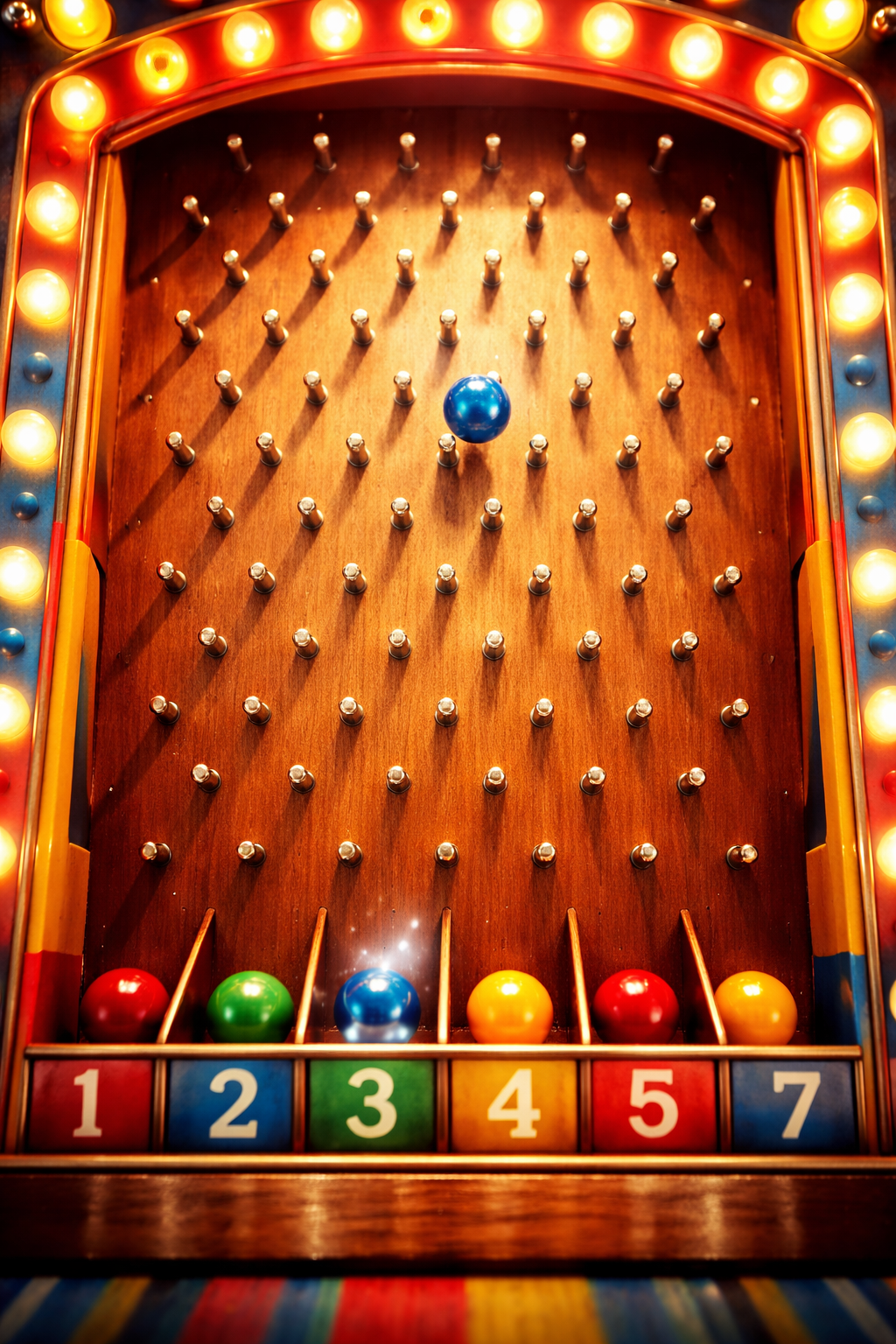
To make that concrete, let’s use a familiar mental model: a carnival nail-board ball game.
The Carnival Nail Board
Unless you're a Zoomer who's been indoors since Covid, you probably have seen the carnival game where you have a vertical board filled with nails. You drop a ball at the top. It pings off the nails as it falls, lands in a slot at the bottom and if it's the slot you bet on, you won the stuffed animal.
- The ball = your input moving through the model
- The nails = the model’s internal weights and connections
- Gravity = probability pulling toward “more likely” outcomes
- The landing slot = the output you see
What “Training” Really Means
Training AI isn’t “teaching” the way humans learn. Training is adjusting the nail positions so the ball is guided toward better landing zones more often. Think of training like bending the nails ever so slightly, and making some of the nails loose and other tight to effect how much bounce they give to the ball.
Do that across massive amounts of examples, and the board develops strong paths: certain routes become far more likely, while others become rare.
Prompting: Tokens as Starting Positions
The words you type (often called tokens) are like placing balls at specific starting points above the board. Where you start the ball changes where it’s most likely to land.
When you say “Hi, how are you?” you’re placing balls over a probability path that often land on: “I’m doing well — how about you?” or “Doing great!”. The ever famous AI "Hallucination" happen when balls either start from a point no one's started one from before, or the ball goes astray and land in less probable slots.

From a Board to a Cube
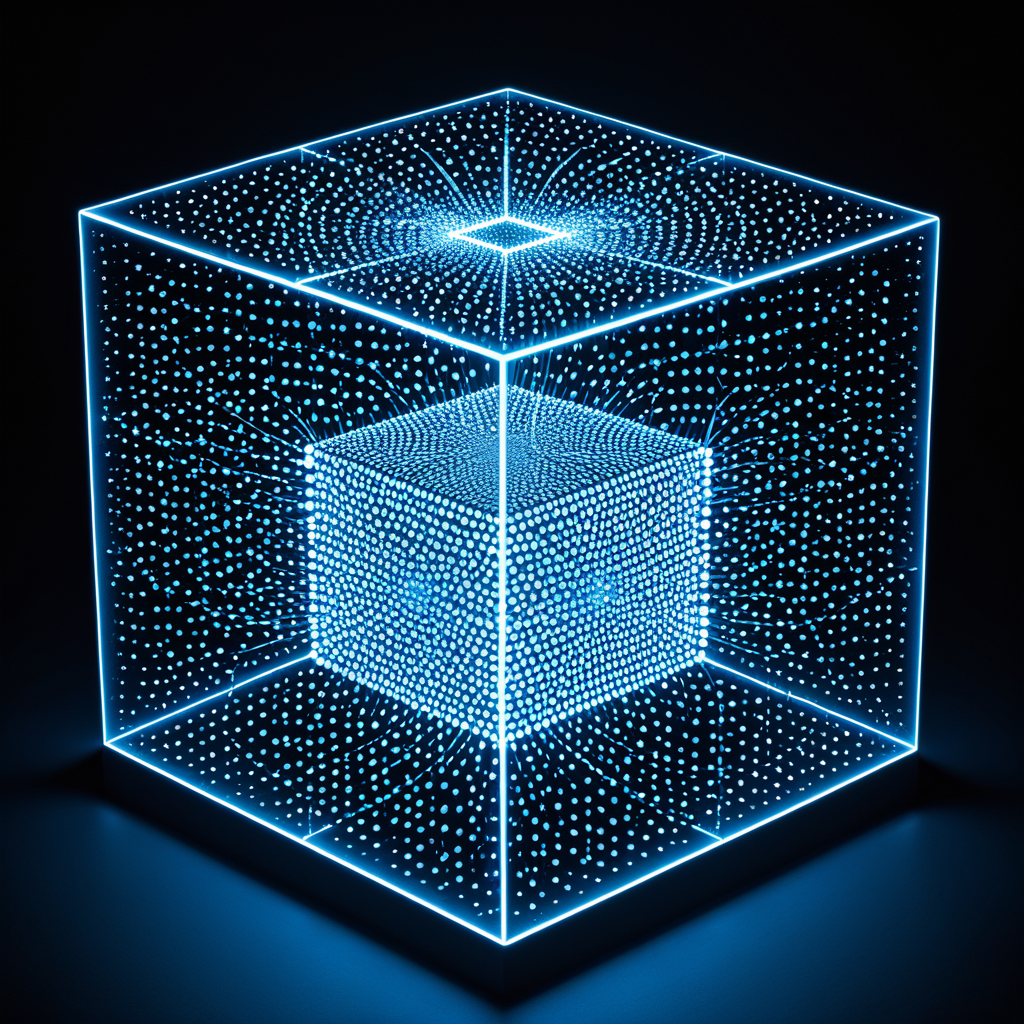
Here’s where the “black box” feeling comes from: the real board isn’t flat. It’s more like a cube (and beyond) where the nails are floating in space. When the ball hits a nail, it doesn't just have the option of going left or right, it has the option to go in any direction, side-to-side and forward-to-back. And when it comes to the floating 3D nails(neurons), we're talking BILLIONS of them.
And instead of one ball, imagine thousands dropping at once. Currently Rúna handles 1200 tokens, that's potentially 1200 balls dropping at once into a cube filled with 14 Billion pegs. It's a massive thing to visualize, but if you can manage, The system is understandable — but tracing every microscopic bounce is not practical.
The Black Box Isn’t Ignorance
When engineers say “black box,” they usually don’t mean they have no idea what’s happening. They mean the system is too large to narrate step-by-step.
It’s like rainwater collecting at the bottom of a window during a storm: you can understand gravity and water perfectly, but you can’t realistically reconstruct the exact path of every droplet after the fact or make accurate predictions of where the next drops are going to go. All you know it they are traveling down and you can approximate where they will land.

Creativity: Tight Nails vs Loose Nails
Turning “creativity” up or down is like changing how loose or tight the nails are.
- Tight nails → predictable bounces → safer, more conventional outputs
- Loose nails → wider deflections → more surprising outputs (and more risk)
Loose nails don’t create imagination — they create variance. That variance can produce brilliance, but it can also produce confident-sounding mistakes.
No Intent, No Understanding, No Will
Once the balls are placed and released, the system simply lets them fall. It doesn’t “know” what’s right. It doesn’t “understand” what it says.
AI is exceptionally good at guessing what usually comes next — nothing more, nothing less.